01Runbooks Integration
Run runbooks and checklists next to your live terminal sessions.
A web terminal, cross-platform workspace that unifies SSH, serial console access, runbooks, and workflow notes into a single, browser-based workflow for engineers working with real devices.
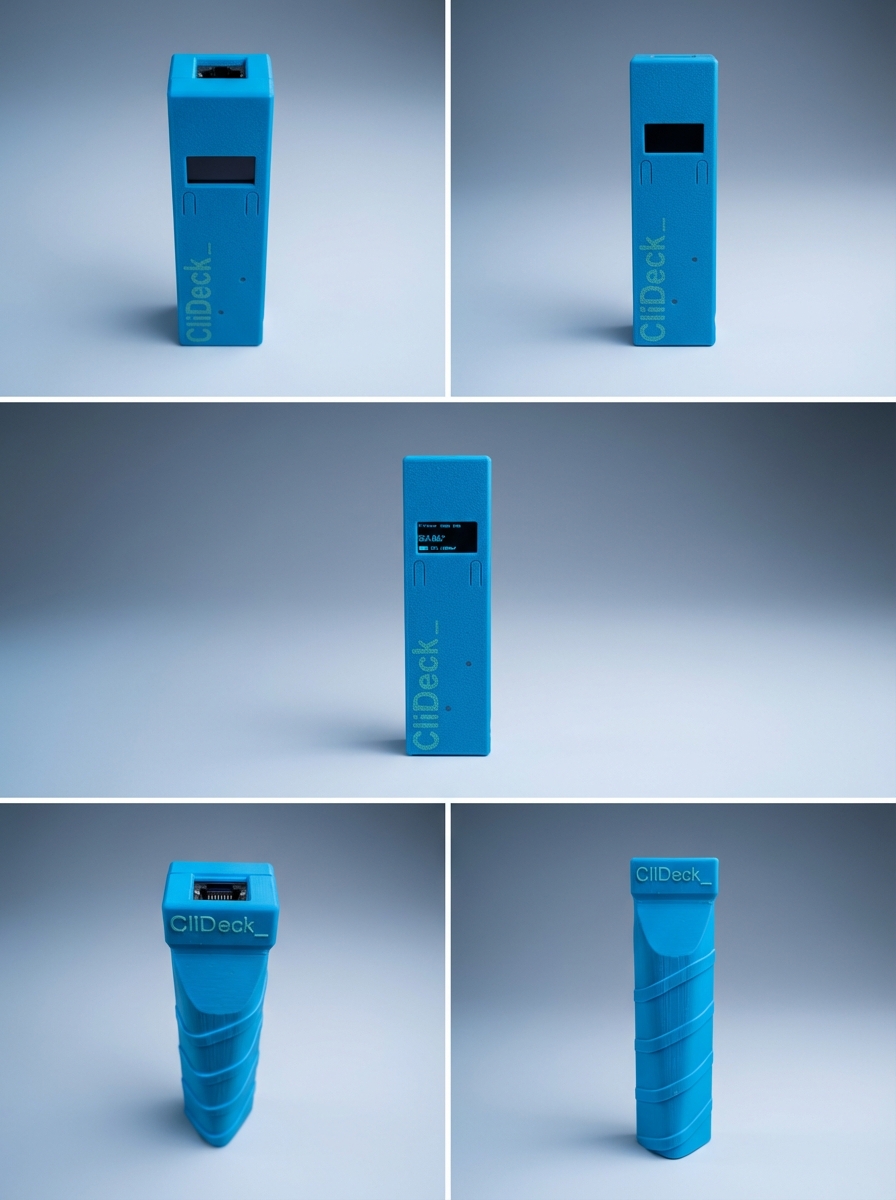
Run runbooks and checklists next to your live terminal sessions.
A tiling workspace for SSH and Serial sessions — side-by-side, synced, fast.
Native agents for macOS, Windows, and Linux with the same workflow everywhere.
Direct browser access to COM/ttyUSB devices via Web Serial API.
Built-in Markdown notes for device docs, commands, and troubleshooting history.
Local proxy for SSH, SFTP, and port forwarding — no inbound ports exposed.
End-to-end encrypted sessions with flexible deployment options (cloud, hybrid, self-hosted).
Works in modern browsers (Chrome, Edge, Opera) — no plugins.
Install the agent once, connect in seconds, and keep your setup zero-config.
Connect servers or devices via SSH, USB, or Serial (UART / console ports).
CliDeck Agent runs on macOS, Windows, or Linux and talks directly to your hardware.
All traffic is encrypted and routed through a secure tunnel, depending on your deployment model.
Your SSH and Serial terminals run in the browser with native performance.
Notes, runbooks, and session history stay attached to the device and workflow.
Built for those who manage the physical layer of the internet — from data centers and network closets to labs, workbenches, and edge devices.
Rapid serial console and SSH access to Cisco, Juniper, and MikroTik devices. Configure routing, switching, and VLANs without switching between outdated tools.
Unified workspace for SSH sessions, SFTP, port forwarding, and bare-metal recovery via serial console. Manage Linux and BSD servers efficiently from one modern terminal.
Remote SSH and serial console access for Raspberry Pi — ideal for labs, home servers, and field deployments. Keep terminal sessions, notes, and commands organized in one place.
Execute runbooks across multiple targets and environments. Reduce incident response time with session logging, notes, and command context tied directly to terminals.
Debug embedded devices — Arduino, ESP32, and Raspberry Pi — directly from the browser. Monitor UART / USB serial output in real time without local tooling pain.
Connect to a Raspberry Pi via SSH and keep notes next to the session
Open multiple serial consoles while configuring network devices
Run operational runbooks during incident response
Document commands and fixes directly in the terminal context
Stop context switching between documentation and your terminal.
CliDeck works with the most common USB-to-Serial adapters and UART bridges used by engineers and makers.
We support all major USB serial chips, including:
FTDI (FT232) — industry standard for reliable serial connectivity
Silicon Labs (CP210x) — widespread support across platforms
Prolific (PL2303) — common legacy adapters
WCH (CH340 / CH341) — low-cost serial bridges popular in labs
This means you can connect devices via USB UART, console cables, and COM/ttyUSB interfaces — perfect for routers, switches, embedded boards, Raspberry Pi, test benches, and lab hardware.
Why engineers move from legacy terminals to CliDeck
Most terminal tools were designed decades ago — long before modern browsers, secure local agents, and hardware-centric workflows. CliDeck combines SSH, serial console access, documentation, and operational context into a single workspace — with flexible deployment options for cloud, hybrid, or self-hosted setups.
| Platform | Installation | Serial Port | Runbooks | Tiling UI |
|---|---|---|---|---|
| PuTTY | Required | Yes | No | No |
| SecureCRT | Required | Yes | No | Limited |
| Termius | Required | No | No | Limited |
| CliDeck | Local Agent + Browser | Native Web Serial | Integrated | Advanced Grid |
It depends on your deployment. Serial communication happens locally via the Web Serial API. SSH/SFTP/FTP connections are handled by a local agent, and you can choose whether data and logs stay local, go to the cloud, or remain inside a self-hosted environment.
CliDeck works in modern Chromium-based browsers, including Chrome, Edge, and Opera. No plugins or browser extensions are required.
CliDeck provides native agents for macOS, Windows, and Linux, ensuring the same terminal workflow across all platforms.
CliDeck supports the most common USB-to-Serial adapters and UART bridges, including FTDI (FT232), Silicon Labs (CP210x), Prolific (PL2303), and WCH (CH340). This covers routers, switches, embedded boards, Raspberry Pi, and lab hardware.
Yes. CliDeck offers a free tier, so you can try core features without upfront cost.
Secure remote terminal access with cloud, hybrid, and self-hosted deployment options — designed for teams and enterprise environments.
Shared terminal sessions, notes, and runbooks for teams working with the same infrastructure and hardware.
Organize and manage multiple devices, labs, and environments from a single workspace — with consistent SSH and serial workflows.
Higher-level automation built on top of runbooks and real device interactions — designed for engineers, not abstract pipelines.
Access your hardware infrastructure securely from any browser.