
Knowledge base
CliDeck Blog
Practical guides for serial console access, browser terminals, runbooks, remote hands, ITAD network equipment processing, OOB automation, and safer infrastructure operations.
The CliDeck Blog is a practical knowledge base for engineers and operations teams working with real infrastructure: switches, routers, firewalls, appliances, servers, console ports, SSH sessions, recovery workflows, asset processing, and documented handoffs.
124Published articles
10Active topics
13Current page
Knowledge map
What you can learn here
Recommended paths
Best starting points
Serial Console
Serial console basics
Start here if you need to connect to a console port, find the right COM port, choose the correct baud rate, or fix serial console problems.
Serial ConsoleBrowser terminal workflows
Start here if you want to compare browser-based SSH or serial console workflows with traditional terminal apps.
RunbooksRunbooks and safer operations
Start here if your team repeats the same commands, handles incidents, or needs safer maintenance workflows.
Remote HandsRemote hands and shared terminals
Start here if onsite technicians, senior engineers, customers, or vendor support need to work on the same live terminal session.
ITAD & RefurbishmentITAD network equipment processing
Start here if your team resets, zeroizes, recovers, verifies, or documents network devices for resale, reuse, refurbishment, or recycling.
ITAD & RefurbishmentOOB automation and recovery
Start here if you need serial fallback, provisioning files, recovery workflows, or documented device processing.
CliDeck ecosystem
CliDeck products mentioned in the blog
CliDeck Workspace
Browser-based terminal workspace for SSH, serial workflows, runbooks, notes, layouts, logs, and shared sessions.
Console Server Go
Pocket-size, battery-powered portable console server and next-generation USB console cable for rack-side and remote-hands console access.
CliDeck Net Controller
Rugged 12-port portable console server and OOB automation controller for ITAD, refurbishment, recovery, provisioning, barcode/API workflows, and documented results.
runbooks31ITAD30remote-operations29itad28operational-evidence23refurbishment18verification18network-device-wipe17serial-console13factory-reset10
All articles
Guides, product notes, and workflow references
Page 13 of 14
Serial Console
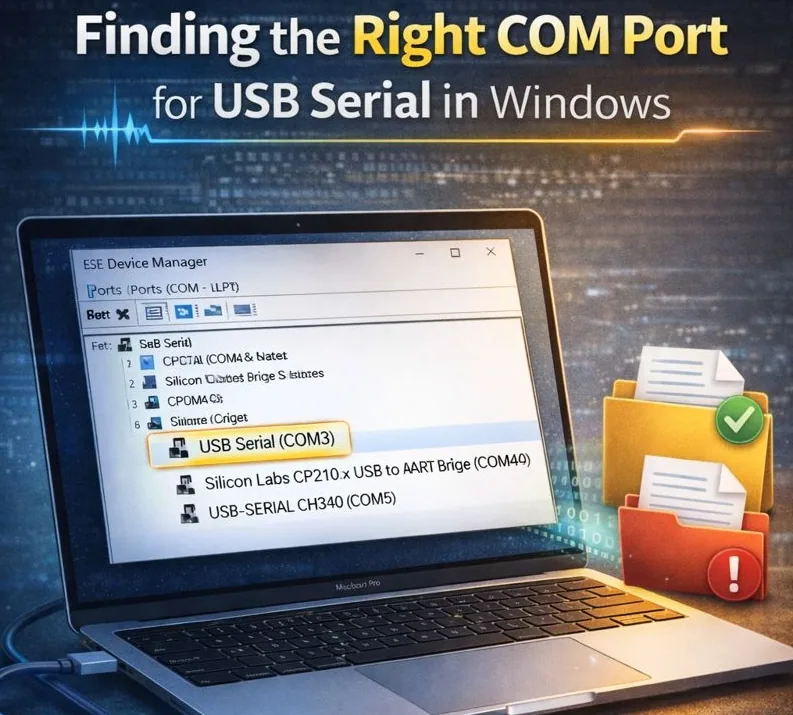
Windows: Finding the Right COM Port for USB-Serial (FTDI/CP210x/CH340) + Driver Sanity Checks
A practical Windows 10/11 checklist for USB-Serial adapters (FTDI/CP210x/CH340): how to find the correct COM port fast, verify drivers and device health, ide...
Network Device Recovery
Cisco: How to Add a VLAN to a Trunk (IOS/IOS XE) — Fast Fix + Verification
Learn how to add a VLAN to a trunk on Cisco switches: allow VLANs, remove/append VLANs safely, set native VLAN, and verify with show interfaces trunk and switchport.
Serial Console
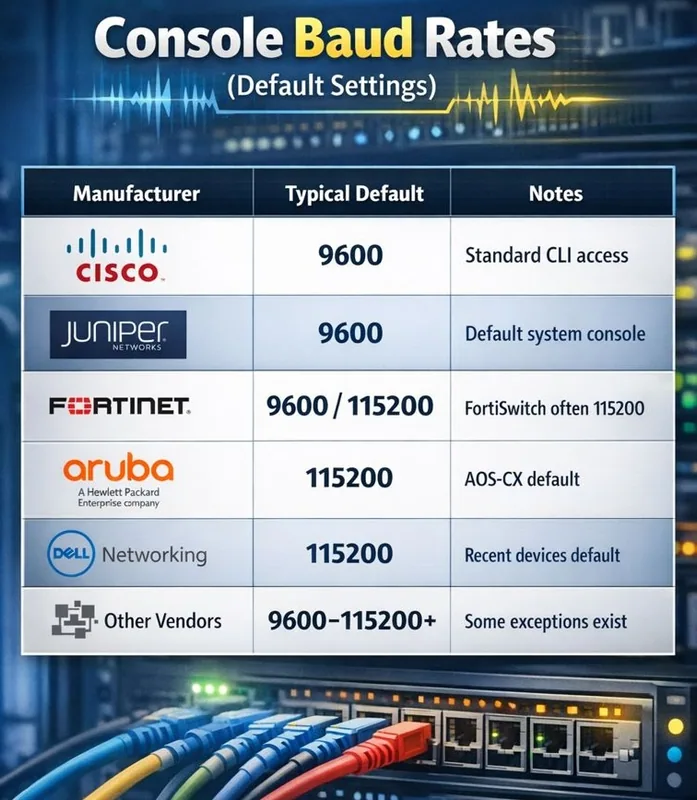
Default Console Port Speeds (Baud Rates) for Cisco, Juniper, Fortinet, Aruba, Dell, and More
Find the default console port speed (baud rate) for popular network switches, routers, firewalls, and server BMCs. Fast reference table for Cisco, Juniper, A...
Serial Console
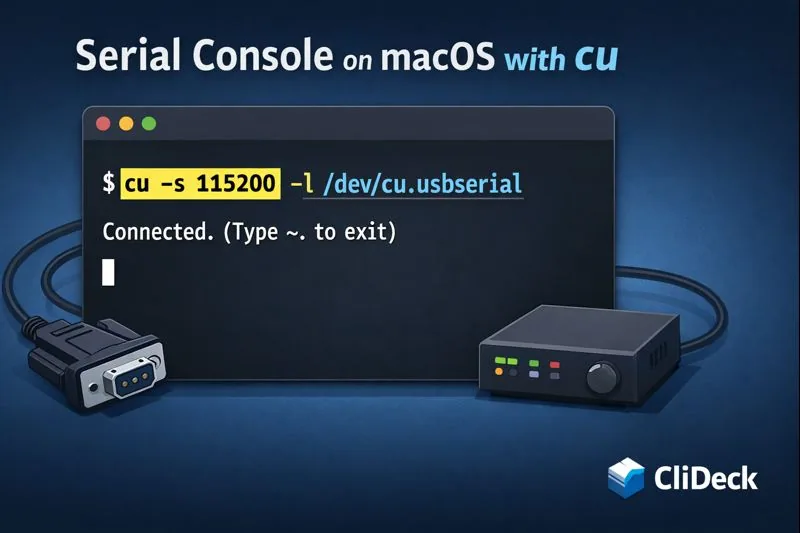
Serial Console on macOS with `cu`: The Simplest Built-In Alternative to `screen`
A practical guide to using `cu` on macOS for serial console access: why it’s a great offline option, how to pick the right `/dev/cu.*` device, set baud rate...
![Fixing “[screen is terminating]” on macOS: A Checklist That Actually Works - Serial Console workflow guide for CliDeck readers](/images/blog/7ba86573-82cd-491f-9106-50048534859e.webp)
Serial Console
Fixing “[screen is terminating]” on macOS: A Checklist That Actually Works
Seeing “[screen is terminating]” on macOS? This practical checklist covers the real causes and fixes: the `screen ls` vs `screen -ls` trap, choosing `/dev/cu...
Serial Console
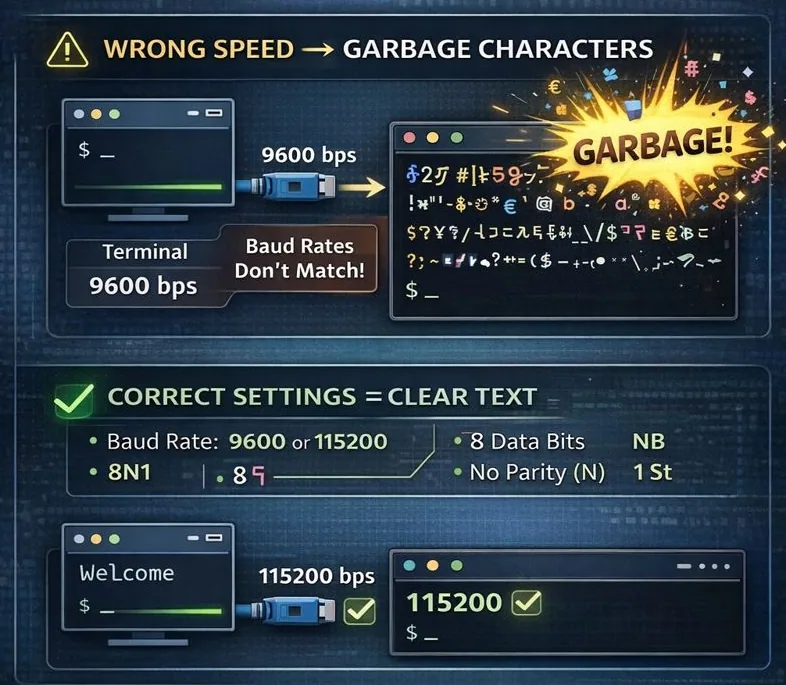
Garbage Characters in Serial Console: Baud Rate & 8N1 Explained (With Quick Tests)
Seeing “garbage characters” in a serial console? It’s almost always a baud rate mismatch or the wrong line settings (8N1). This guide explains what’s happeni...
Serial Console
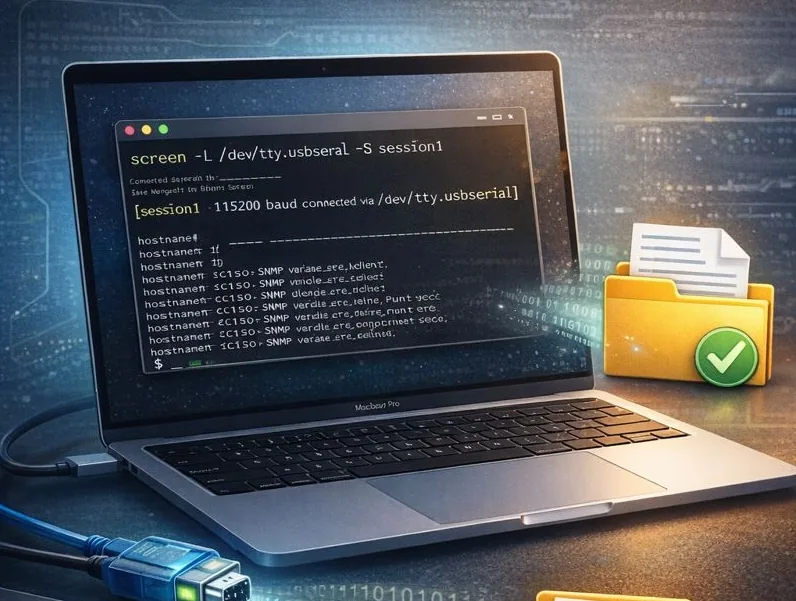
Logging a Serial Session on macOS: `screen -L`, Session Naming, and Best Practices
A practical guide to logging serial console sessions on macOS using GNU screen: how to use `-L`, `-Logfile`, `-S`, `-h`, detached mode, safe reattach, and si...
Serial Console
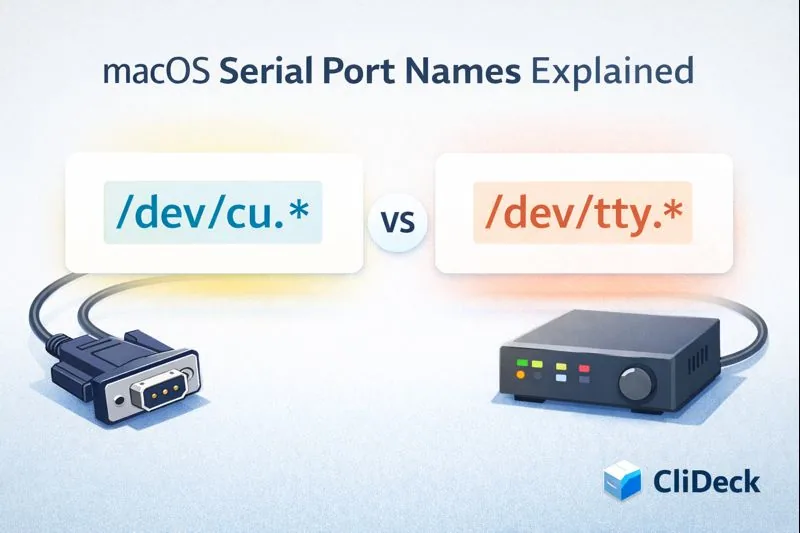
macOS Serial Port Names Explained: `/dev/cu.*` vs `/dev/tty.*` (and which one to use)
On macOS, the same USB-Serial adapter often shows up as two devices: `/dev/cu.*` and `/dev/tty.*`. This guide explains what each one means, which one you sho...
Serial Console
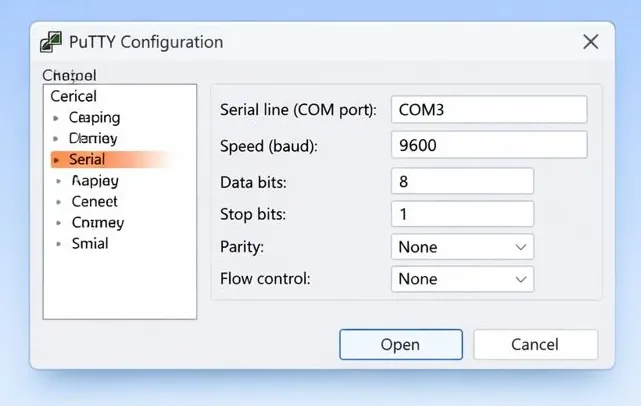
Connecting to a Cisco Console on Windows 11: PuTTY Setup (COM Port, 9600 8N1, Drivers)
A step-by-step PuTTY setup for Cisco console access on Windows 11: how to find the correct COM port, which serial settings to use (9600 8N1), how to handle c...